![[Image of WPC QPF U.S. rainfall potential]](https://www.nhc.noaa.gov/storm_graphics/AT05/refresh/AL0519WPCQPF+gif/095412WPCQPF_sm.gif)
When you live this close to the ocean, hurricane season is a familiar drill. We have to evaluate the risks of staying against the trouble of leaving. Each hurricane is different.
Florence (2018) came west across the Atlantic, making landfall south of us (about 2 hours' drive away), moving slowly as a Cat 1 storm with Cat 4 storm surge. The combination of surge and rainfall caused damage in our area. Rainfall amounts are greatly impacted by how long a hurricane sits on you, i.e. -- how fast it's moving. Florence slowed down as she hit land and made her "turn" south.
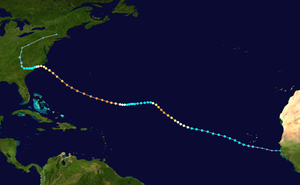 |
| Hurricane Florence's path |
 |
| Hurricane Arthur's path |
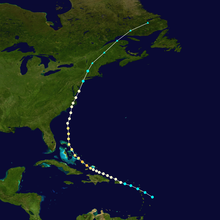 |
| Hurricane Irene's path |
For Hurricane Florence, I evacuated early, went far far away, and stay gone until the electricity came back on. It was a good call. But I'm confused about Dorian. He looks a lot like Arthur, who was a gentleman as he passed by. Last year in Florence, our ground was already saturated from 6 months of rain; this year we've had drought. Will Dorian plow through quickly? That helps. Will he shift west and come directly overhead? Yikes! Evacuation is difficult because of uncertainty, and even with weather models and warnings a week ahead of time, hurricanes are still quite uncertain.
I haven't decided yet. I will decide within the next 24 hours. After that, it may well be too late to evacuate easily.